Photo Ideas & Style
Simplicity and Minimalism: The Art of Creating Simple Photographs
In photography, simplicity is a powerful language. It is about stripping away visual noise to ensure your core subject is legible and immediately understood...
In photography, simplicity is a powerful language. It is about stripping away visual noise to ensure your core subject is legible and immediately understood by the viewer's brain. Taking a simple photo is not about creating something boring or plain; it is about refining your composition so the story you are trying to tell can breathe and connect.
While simplicity is a core pillar of minimalist photography, you do not need to adopt a minimal style to benefit from learning how to simplify your frames. Below are practical techniques to help you create simple, impactful images.

The Core Elements of a Simple Composition
A simple photograph focuses on a single subject and allows negative space — the empty areas surrounding the subject — to carry the visual weight of the frame.
Negative Space. This is your best tool. Empty sky, a flat field, a solid wall, or dark shadow areas aren't "empty" space; they are active components that frame and prioritize your subject. Negative space gives the viewer's eye a peaceful place to rest, leading them directly to what matters.
Leading Lines. Roads, fences, shadows, or architectural lines can divide the frame and direct attention precisely toward your focal point. Keep lines clean and uncluttered to maintain simplicity.
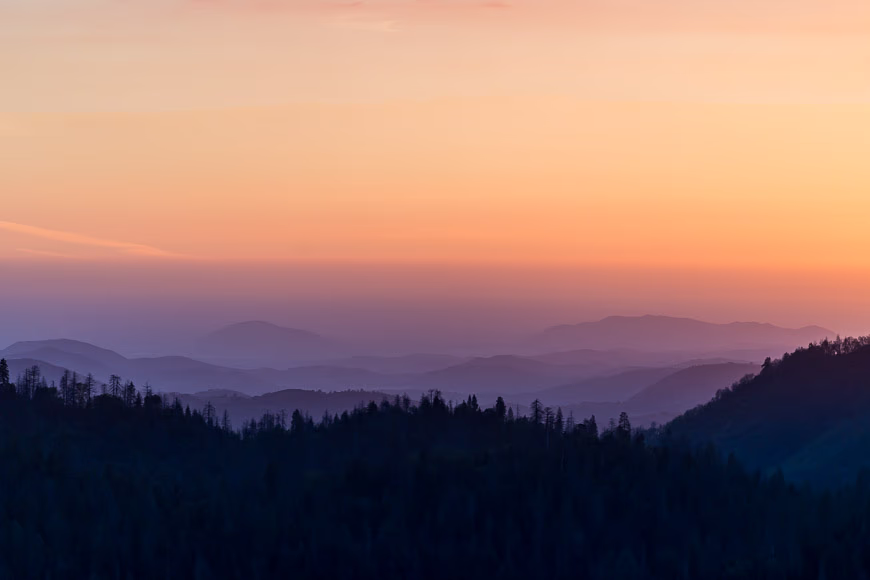
Color Harmony and Contrast. A simple photo often uses a restricted color palette. Working with two complementary colors, a monochromatic scheme, or high-contrast black-and-white eliminates color confusion and simplifies how the brain reads the image.
How to Simplify Your Images in the Field
- Change your perspective. If a background is cluttered with trees, signs, or people, squat down and shoot upward against a clean sky. Or, stand on an elevated platform and shoot downward against a flat floor.
- Get closer. Fill the frame with your subject to crop out surrounding distractions. Sometimes, zooming in tight on a detail tells a stronger, simpler story than a wide shot containing conflicting elements.
- Shoot wide open. Utilizing a shallow depth of field (f/1.8 or f/2.8) blurs out background clutter into a soft, creamy texture. This naturally separates your subject and isolates them in the frame.
- Re-evaluate before pressing the shutter. Look at the edges of your viewfinder. Are there stray branches, power lines, or bright highlights that distract from your subject? Shift your camera slightly to crop them out before capturing the file.
Less Is More: Curation and Selection
Simplicity doesn't stop at capture — it extends to how you select and present your work. A gallery containing fifty slightly different versions of the same portrait feels cluttered and repetitive. Culling your work down to a few highly impactful, unique frames shows trust in your vision and allows the individual photos to carry more weight.
Final Thoughts
The art of creating simple photos is a process of subtraction. Look at your frame and ask: What can I remove to make my subject stand out? By utilizing negative space, managing color, cleaning up edges, and shooting from creative perspectives, you can craft beautiful, minimalist images that speak clearly to any viewer.
FAQ
What is the difference between simple and minimalist photography? Simplicity is a compositional tool used in all genres of photography to make a subject clear and legible. Minimalism is a specific artistic style characterized by extreme isolation, stark contrast, and massive amounts of negative space.
How do I make a simple photo feel dynamic instead of boring? Use strong leading lines, off-center framing (such as the rule of thirds), and interesting natural light or shadows. Simple photos rely on high-quality execution of basic elements, so light and geometry carry more weight.
Can I create simple photos in busy urban environments? Yes. Look for clean architectural patterns, shoot upward against the sky to isolate subjects, utilize deep shadows to hide background clutter, or use a fast prime lens at wide apertures to blur the busy city streets.