Posing & Portraits
Peter Hujar: The Master of Black-and-White Portrait Photography
Peter Hujar's black and white portraits are among the quietest powerful photographs in the medium. When his work was shown at the Maureen Paley gallery in Lo...
Peter Hujar's black and white portraits are among the quietest powerful photographs in the medium. When his work was shown at the Maureen Paley gallery in London, Vogue identified what makes them endure: "It's partly his attention to lighting, partly his knack for composition. But it's also the very human dynamic between Hujar and his subjects: the vibrant, complicated people he photographed seem to trust him completely."
That trust is the whole argument. Hujar photographed artists, writers and performers from New York's downtown scene in the 1970s and 1980s, often people he knew, and the resulting portraits do not describe how his subjects looked so much as register who they were.
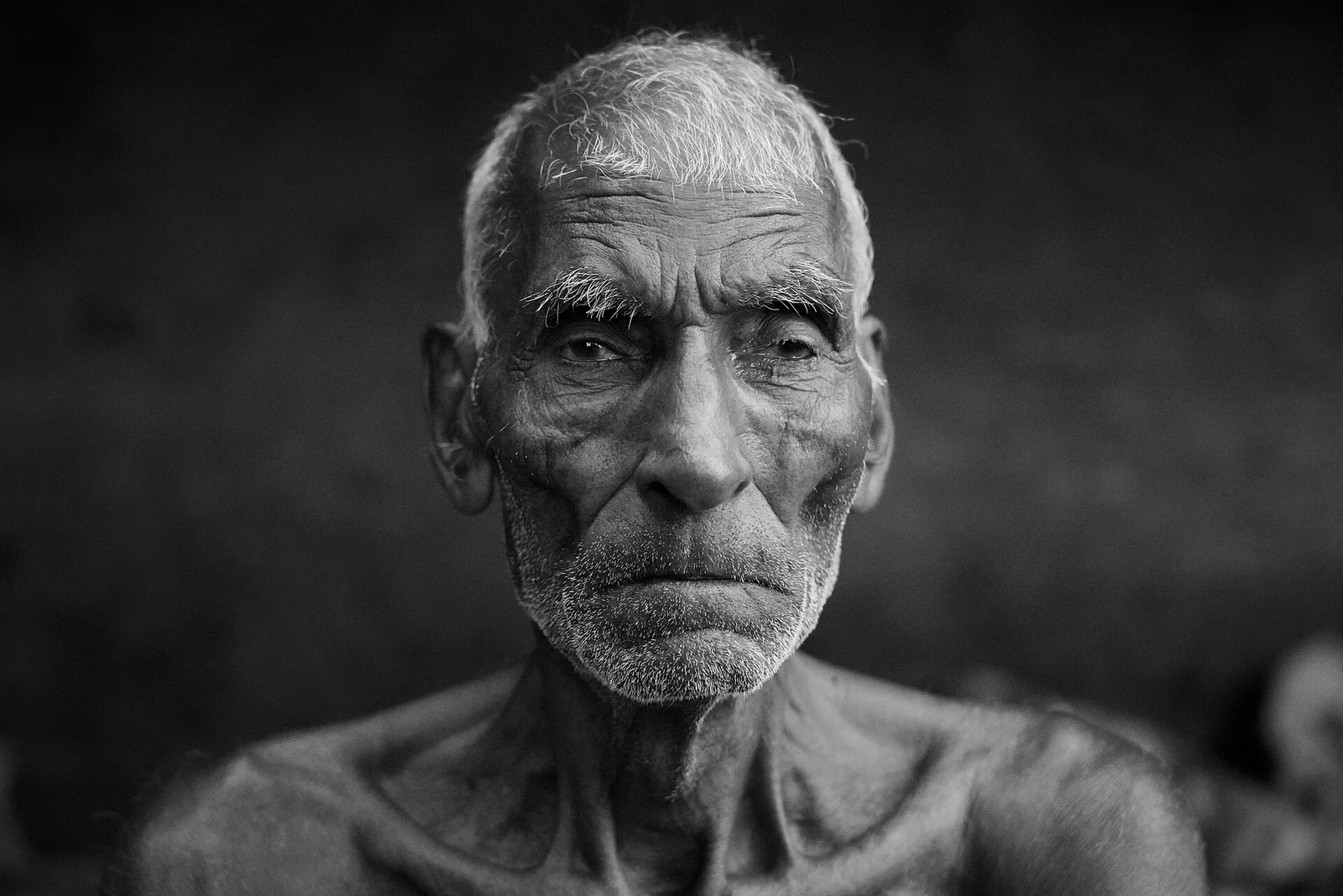
Photo: Khairdeen urf Pritam, Black and White.jpg by Satdeep Gill — CC BY-SA 4.0, via Wikimedia Commons.
The Human Dynamic
What separates Hujar from a technically proficient portraitist is the depth of connection visible in the frames. A competent photographer can produce a well-lit likeness of anyone. Hujar produced photographs in which the subject appears to have agreed to be seen.
For photographers working now, in conditions of quick shoots and constant output, the approach is almost radical. It was slow, deliberate and relational. Sessions were not transactions but encounters, and the images carry the evidence.
The lesson is not sentimental. It is practical: rapport is the mechanism that produces the photograph, not a pleasant extra that surrounds it. A subject who has decided to cooperate gives you access to something that no amount of direction can produce, and readers recognise it within a fraction of a second.
The way to build it is unglamorous. Talk before you raise the camera. Learn something about the person. Explain what the photograph is for. Work at a pace that does not feel like processing. And photograph the person who is actually in the room rather than the version of them you had planned.
Lighting as Revelation
Hujar's lighting is deceptively simple. He generally worked with one source, frequently daylight through a window, which sculpted faces with soft shadow and bright highlights.
There is no trickery in the setup and nothing designed to impress. The light has one job, which is to reveal the person in front of the camera with clarity and a certain amount of compassion. That is a different objective from drama, and the difference shows in the results: a face lit to reveal looks like a person, while a face lit to impress looks like a photograph.
What single-source light does well is give a face structure. One source produces a lit side and a shadow side, and the transition between them carries the shape of a cheekbone or a jaw. Adding fills removes that information. Photographers often add light in order to feel safe, and the cost is exactly the modelling that makes a portrait legible.
The practical instruction is to start with one source and stay there for longer than feels comfortable. Move the subject rather than adding a light. Turn the face until the shadow falls where it describes the features, and the ordinary window does the rest.
Composition as Respect
Hujar's compositions are formal without being stiff and direct without feeling aggressive. He placed subjects centrally in the frame, often looking straight into the lens, with backgrounds deliberately emptied of distraction.
That restraint is not a lack of invention. It is a decision about where attention goes. By removing the furniture, the pattern and the secondary figures, Hujar leaves a viewer nothing to look at but the person, which is a form of respect as much as a compositional strategy.
Three habits follow from it, and all of them are available on any shoot.
Empty the background. Move the subject, change the angle, open the aperture, or wait for the crowd to pass. A plain wall is worth more than a beautiful location with clutter in it.
Let the subject meet the lens. Direct eye contact, at a close crop, produces an intimacy that no candid angle achieves. It also requires trust, which is why it tends to arrive late in a session.
Keep the frame tight enough to matter. In a portrait, everything that is not the person is a distraction competing for the attention the face has earned.
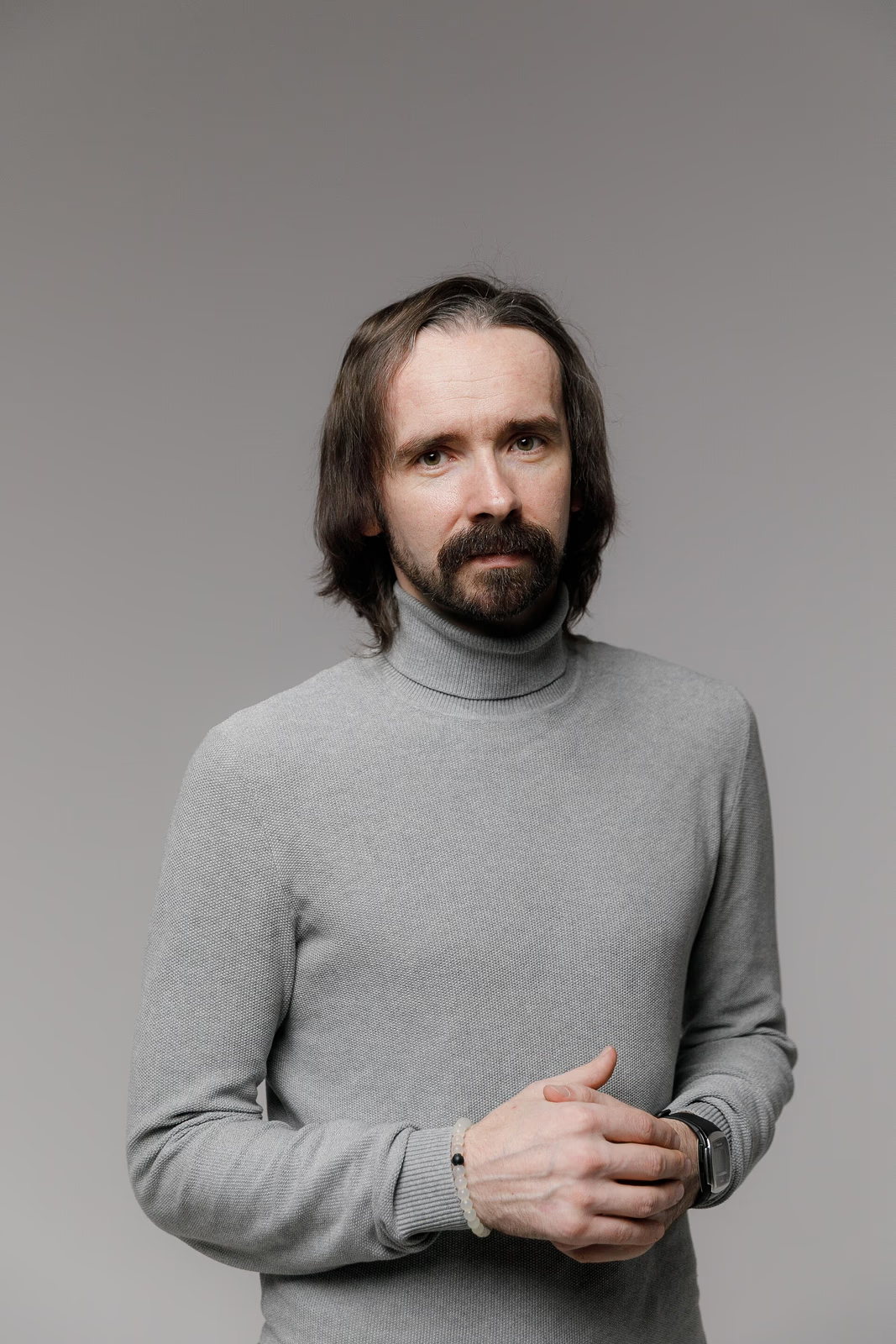
Photo: Scientist (chemist) Siarhei Besarab Studio portrait 2026 (03).jpg_Siarhei_Besarab_Studio_portrait_2026_(03).jpg) by Volha Sh — CC BY-SA 4.0, via Wikimedia Commons.
Working in Black and White
Colour is information, and in a portrait it competes with expression. Black and white removes that competition and leaves light, shadow, texture and gesture, which is why it remains the default for portraits that aim at psychological rather than descriptive accuracy.
The transferable technique is to think in tonal values rather than colours. Ask what will render as light, what will render as dark, and whether the face separates from the background in the print. A light-skinned subject against a light wall becomes a floating head; a dark-skinned subject photographed with the same approach loses the highlights that describe their features. Both problems are solved the same way, which is by controlling the relationship between the subject's face and the tone behind it.
Hujar's work is instructive here precisely because the lighting looks effortless. It is not. It is a single source placed so that the face is brighter or darker than the background, with enough modelling to hold the shape of the features and enough shadow to give the image gravity.
Lessons for Portrait Photographers
- Build trust before you build the shot. Connection matters more than composition.
- Simplify the lighting. One well-placed source is often stronger than an elaborate setup.
- Compose with restraint. Remove everything from the frame that does not serve the portrait.
- Study the face as a landscape. Every face has its own light and its own geography.
- Work slowly and deliberately. Good portraits cannot be rushed, and the subject can feel the difference.
- Print the work. Hujar's images were made for a wall, not a screen.
- Choose subjects you find genuinely interesting. Attention cannot be faked in a photograph.
- Photograph people you know, and get to know the people you photograph.
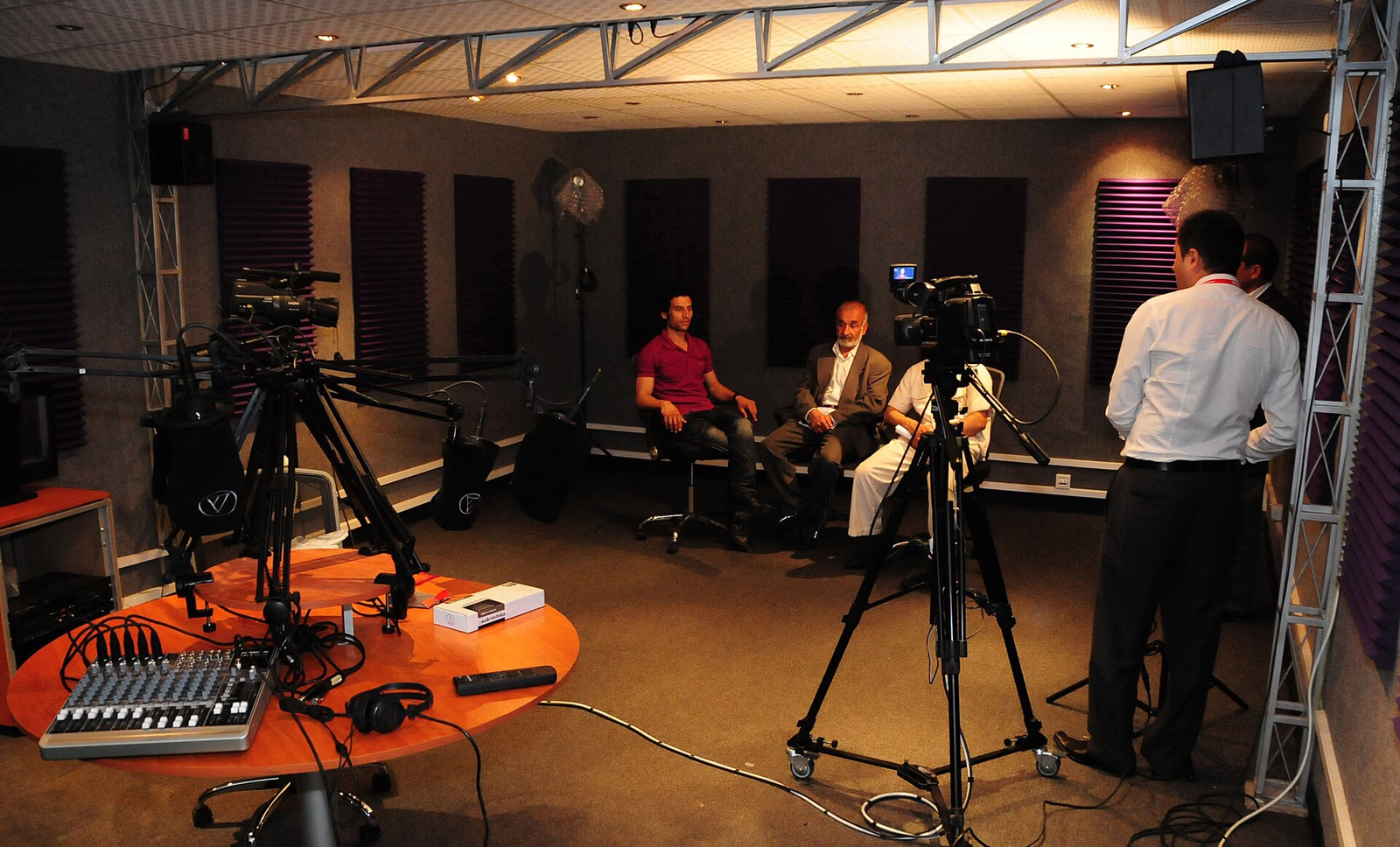
Photo: MOI PA learn camer setup and studio lighting (4571128787).jpg.jpg) by NATO Training Mission-Afghanistan — CC BY-SA 2.0, via Wikimedia Commons.
Practical Tips
- Use natural window light for portraits whenever it is available. It is flattering and timeless.
- Place the subject centrally with minimal background distraction.
- Talk to your subject before and during the shoot. Build real rapport rather than managing it.
- Reduce the lighting to one source and move the subject instead of adding fills.
- Check the tonal separation between the face and the background before you release.
- Consider black and white when expression matters more than colour.
- Print your portraits and judge them at print size.
- Study Hujar's work to see how much can be achieved with almost nothing.
Further Reading
Conclusion
Peter Hujar's legacy is not a technique to copy but an approach to absorb. See your subjects clearly. Light them honestly. Compose with respect. Earn their trust, and then photograph the person who is actually there.
His career is also a reminder about scale. Hujar worked with one light source, modest equipment and people he knew, in a period far less convenient than the present. The photographs endure because of the relationship rather than the technology, and that part of the work has not changed and will not.
FAQ
What made Peter Hujar's portraits so powerful?
A combination of technical discipline and genuine human connection. His lighting and composition were impeccable, but the reason the images hold is that he built real trust with his subjects, which allowed him to photograph who they were rather than how they looked.
What lighting did Peter Hujar use?
Simple, usually single-source lighting, frequently natural window light. His approach was to reveal rather than dramatise, using a single source to sculpt the face with gentle shadow and bright highlights.
How can I build better rapport with portrait subjects?
Talk before you raise the camera. Learn who they are, explain what you are trying to achieve, work slowly, and treat the session as a collaboration rather than a transaction. Subjects who feel respected and understood show it in the photographs.
Why did Hujar work in black and white?
Because it removes the distraction of colour and directs attention to light, shadow, texture and expression. That simplification served his objective, which was revealing the essence of a person rather than describing their appearance.
Do I need studio equipment to work this way?
No. A window, a plain wall and a subject who trusts you are sufficient. The technical bar is low and the relational bar is high, which is why this approach remains available to anyone with a camera and some patience.
How long should a portrait session last?
Long enough that the subject stops performing. That is usually between twenty minutes and an hour for a willing subject, and it is the reason rushed portrait sessions produce images that look rushed.