Photo Ideas & Style
Johnny Dufort: The Most Interesting New-Generation Photographer
When Vogue profiled Johnny Dufort, it described him as "the most interesting new-generation photographer," and the description has held up better than most s...
When Vogue profiled Johnny Dufort, it described him as "the most interesting new-generation photographer," and the description has held up better than most such labels. His work is irreverent, technically inventive and fluent in a visual language that did not exist when the previous generation of fashion photographers learned their craft.
The interesting question is not whether his images look modern. It is what he understands about the people in front of his camera that earlier photographers did not have to.
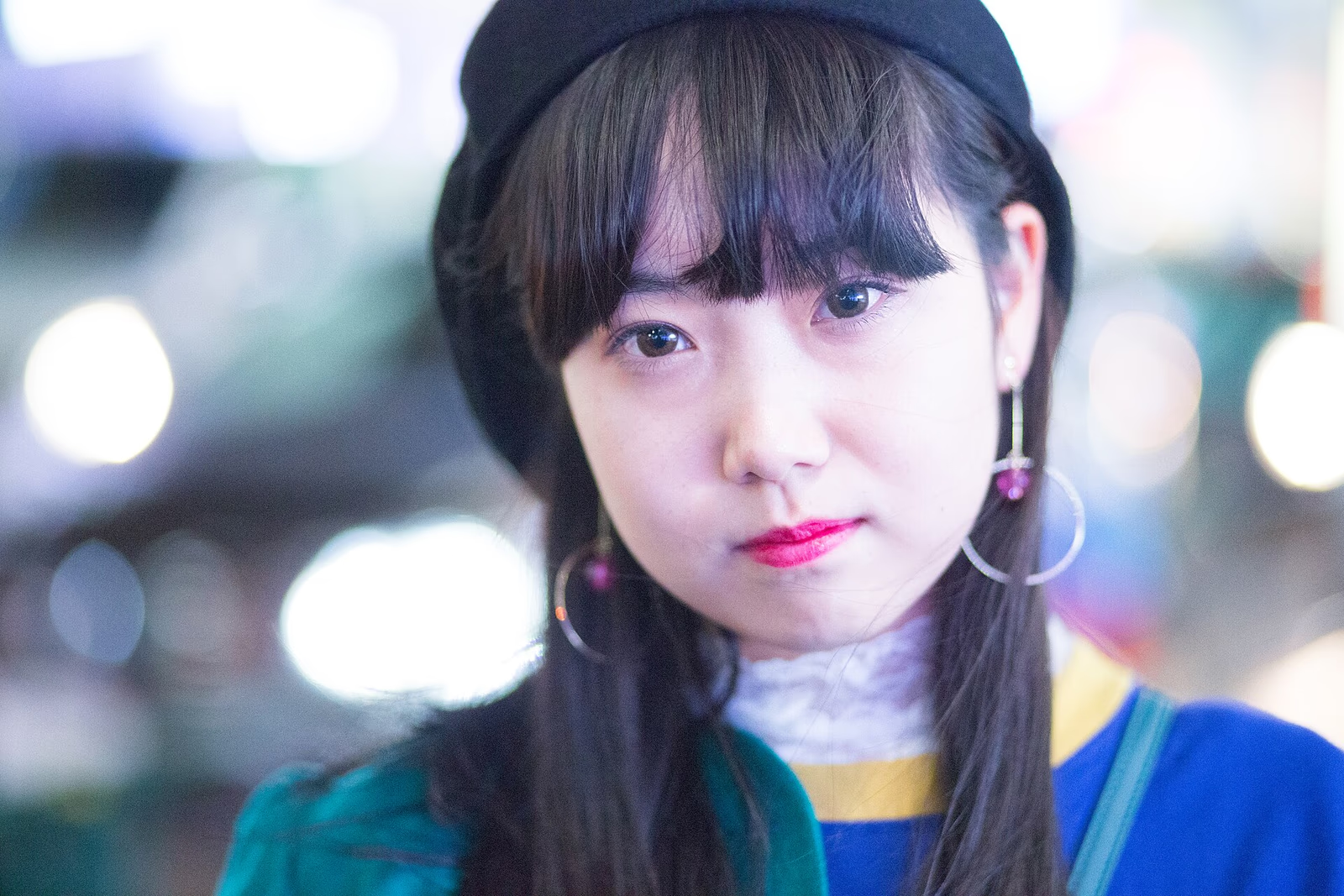
Photo: Harajuku Fashion Street Snap (November 11, 2017) (46370502754).jpg_(46370502754).jpg) by Dick Thomas Johnson from Tokyo, Japan — CC BY 2.0, via Wikimedia Commons.
The Instagram Generation's Visual Fluency
"There are a whole lot of people now who are so used to having their photo taken, what with Instagram, and selfies: people know how to compose themselves," Dufort observes.
That single sentence explains a change in the job. Photographers who came up in the 1980s and 1990s frequently had to teach subjects how to behave in front of a lens: where to put their hands, which way to turn their chin, how to forget the camera was there. That instruction is now largely redundant. Anyone who has spent a decade photographing themselves knows their angles better than most photographers can teach them.
What follows from that is the actual skill Dufort is describing. His task is not to instruct a subject in how to look. It is to find the moment inside their already-developed self-awareness when the performance drops, and to be ready when it does. Working with visually fluent subjects means working faster and watching more closely, because the interesting frames arrive without warning and last less than a second.
There is a second consequence that is less comfortable. When everyone knows how to compose themselves, photographs become correct and forgettable by default. Standing in a good spot, holding a good pose and smiling at the right moment produces an image that looks exactly like everyone else's, and a photographer whose pictures look like everyone else's has no reason to exist.
Breaking the Rules Systematically
Dufort's photographs often look deliberately unfinished. Grain, motion blur, cropping that cuts into the subject, harsh on-camera flash: these are choices rather than accidents.
The distinction matters, because the visual style is easy to imitate and impossible to fake convincingly. Loose work from someone who understands framing and light looks alive. Loose work from someone who does not looks like a mistake. The order of operations matters: learn the rules well enough to know exactly which one you are breaking and what you are gaining by breaking it.
Practical translations of the approach:
Harsh flash is a decision about the world, not a technical failure. Direct flash flattens depth, creates a hard shadow behind the subject, and makes colours slightly wrong. That is exactly what makes it feel immediate: it looks like a photograph that was taken rather than produced.
Motion blur implies that something happened. A frame with movement in it reads as evidence. Every technique that suggests haste buys a kind of credibility that sharpness cannot.
Cropping into the body is a claim about what the picture is. Cutting a head in half or clipping a hand says the subject is bigger than the frame, which is a compositional position rather than an error.
Grain is texture. Digital noise and film grain both provide something for the eye to catch, and they make an image feel handled rather than rendered.
Working With What's Real
Rather than building elaborate sets, Dufort tends to work with what is already in front of him: the location as found, the light as it falls, the subject as they arrive.
This is closer to documentary practice than to the fashion tradition, and it produces images that feel more honest than heavily produced alternatives. It is also, usefully, cheaper. A room with a window, a street with hard afternoon sun, a corridor with a fluorescent tube: all of these are already lit, and the photographer's job is to notice what the light is doing and put something in the right place.
The habit to develop is looking at a location as a set before you add anything. Where is the light strongest? What colours are already in the frame? Is there a surface that will reflect, a doorway that will frame, a wall that will hold a shadow? Most locations answer at least one of those questions, and the discipline is to take the answer rather than override it.

Photo: 20th Anniversary Schwab Foundation Gala Dinner (29950626047).jpg.jpg) by Foundations World Economic Forum — CC BY 2.0, via Wikimedia Commons.
How Images Actually Circulate
Dufort came of age in a period when images are consumed quickly, casually and in sequence rather than as single artefacts on a page. That changes what a photograph has to do.
A magazine spread is read slowly and in a controlled order. A feed is scrolled past at speed, competing with hundreds of other images for a fraction of a second. Photographs designed for the second environment tend to work through contrast: a hard flash frame, an odd colour, an unexpected crop or a face caught mid-expression will stop a scrolling thumb in a way that a beautifully lit portrait will not.
The transferable rules are simple. Make one thing wrong on purpose. Lead with the strangest frame rather than the most polite one. Shoot vertical natively for screens. And accept that the images which annoy you slightly on the first pass are usually the ones that get remembered, because they had something to react to.
Practical Tips
- Work with the visual fluency of subjects who grew up with cameras rather than against it.
- Do not be afraid of grain, blur and unconventional cropping. They are tools, not failures.
- Use available light and real locations before adding complexity.
- Learn the rules first. Breaking them only works when the choice is deliberate.
- Make one element strange: colour, flash, crop or expression.
- Watch how images circulate on social media and photograph for how they will actually be seen.
- Keep the frame honest. If it looks like a production, it will read like an advertisement.
- Shoot fast. The interesting moment is usually the one before the subject settles into a pose.
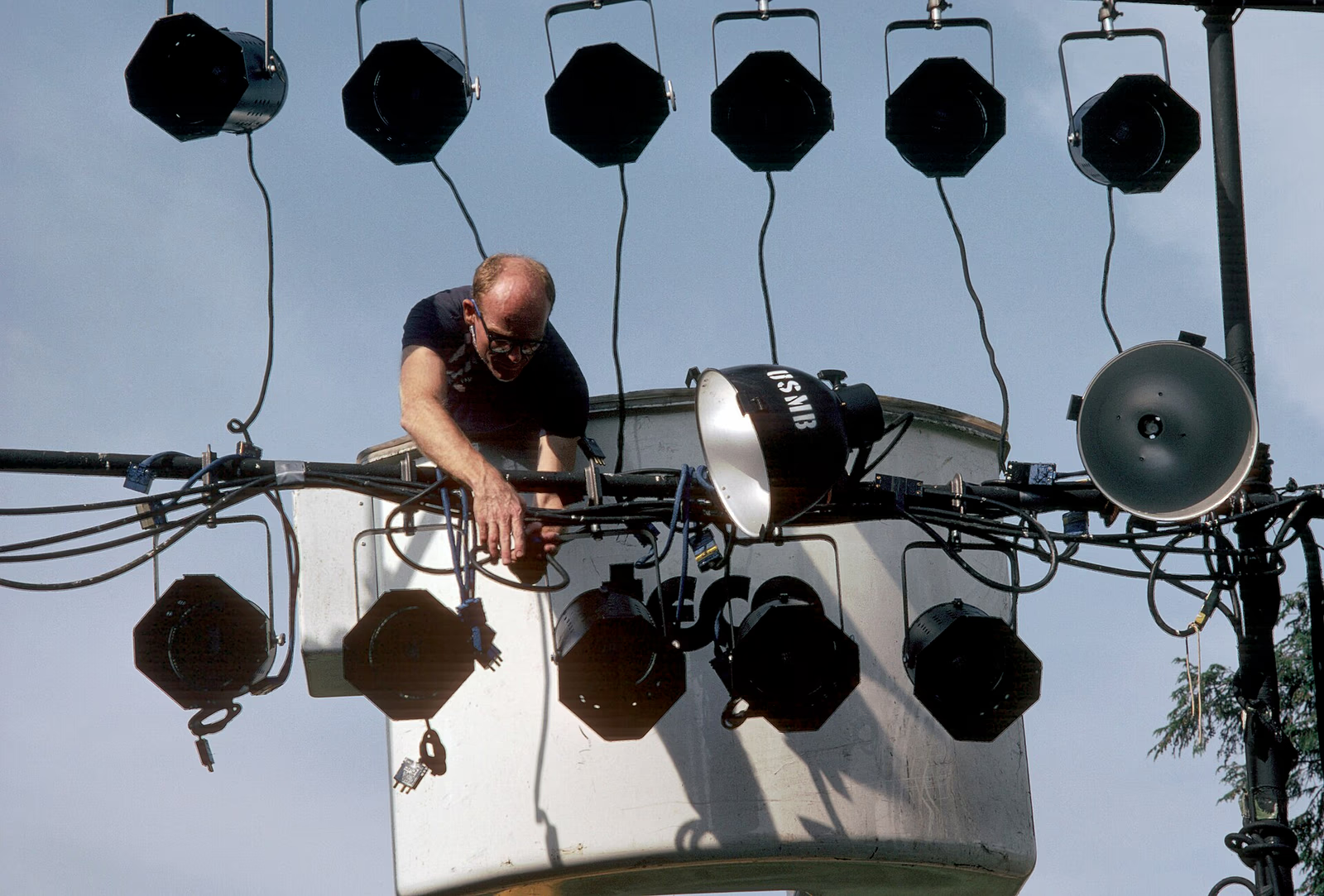
Photo: A member of the stage crew makes adjustments on lights for the US Navy Band's Silver Anniversary Lollipop Concert - DPLA - bba9273ee2b50d2a53595243a16342a9.jpeg by Department of Defense. American Forces Information Service. — Public domain, via Wikimedia Commons.
Further Reading
Conclusion
Johnny Dufort's rise reflects a real shift in fashion photography: away from unattainable perfection and towards images that feel immediate and alive. But the shift is not primarily aesthetic. It comes from a change in the subjects, who now arrive on set knowing how pictures work, and from a change in the audience, who consume images in constant flow.
The photographers who will define the next decade are unlikely to be the ones with the most expensive equipment. They will be the ones who understand how images behave in the world, who can find the unmanaged moment inside a fluent performance, and who are willing to make a frame that looks slightly wrong in order to be remembered.
FAQ
What makes Johnny Dufort's work different from traditional fashion photography?
He embraces rawness over polish. Grain, motion blur, unusual composition and harsh flash are deliberate parts of his style, and he works with subjects' natural visual fluency instead of imposing rigid direction, which produces images that feel immediate rather than produced.
How has Instagram changed fashion photography?
It has created a generation of subjects who understand composition, angles and how they appear on camera, so the photographer's job shifts from teaching people how to pose to finding an honest moment inside an already fluent performance. It has also changed consumption: faster, more casual, in constant flow, which rewards images with instant contrast.
What equipment does Johnny Dufort use?
He works across formats, from professional digital cameras to point-and-shoots and phones. The approach is concept-driven rather than gear-driven, which is a good argument for spending on access and ideas rather than on bodies and lenses.
How can I develop a raw, authentic photography style?
Shoot in available light in real locations, resist over-processing, study photographers who use imperfection deliberately, and develop your own point of view instead of copying a look. The style is easy to imitate and difficult to do well, because it depends on knowing what you are departing from.
Is the rough, flash-lit look just a trend?
The specific version of it will date, as all styles do. What will not date is the underlying principle: photographs that look like they were taken rather than manufactured tend to feel more alive, and every generation finds its own way of achieving that.
Do I need permission to photograph strangers on location?
Yes, in practice and often in law. A commercial shoot on private property needs permission from the owner, and using a recognisable person's image commercially needs their consent. Working quickly in public space is not a substitute for getting releases where they are required.