Gear & Apps
Kevin Tachman's Fashion Week: The Art of In-Camera Multiple Exposures
Kevin Tachman has spent years photographing fashion week from the backstage area and the front row, but the thing that distinguishes his coverage is a techni...
Kevin Tachman has spent years photographing fashion week from the backstage area and the front row, but the thing that distinguishes his coverage is a technique most photographers abandoned with the arrival of digital: multiple exposures, made entirely in the camera.
The results stack a runway moment, a backstage scene and a front row reaction into one frame. They are not composites; they are what the camera recorded over two or three successive shutter releases, which is why they look like the experience of being there rather than a report on it.
"I hope these multiple exposures, all done in camera, no Photoshop, vicariously transport you to the backstage and front row from New York to Paris," Tachman says. The commitment to doing it optically rather than afterwards is both a technical constraint and a philosophical one: there is no safety net, so the vision has to be decided in the moment.
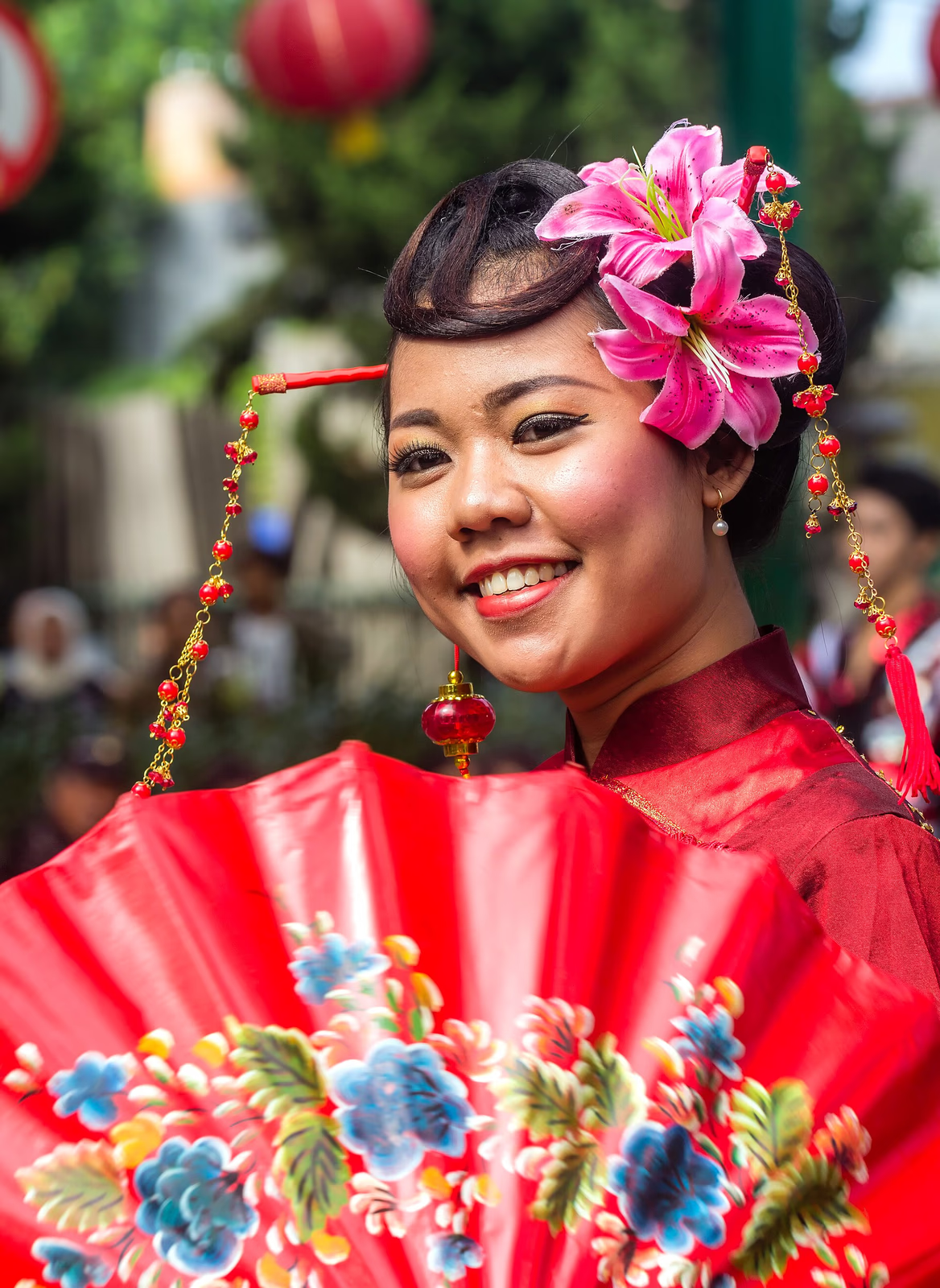
Photo: 2015 Chinese New Year Fashion Show, Sudirman Street, Yogyakarta, 2015-02-15 02.jpg by Crisco 1492 — CC BY-SA 4.0, via Wikimedia Commons.
Why In-Camera Matters
The difference between a multiple exposure made in the camera and one assembled in Photoshop is easier to feel than to describe. When two frames are combined optically, the exposures interact in ways the photographer does not fully control: highlights bloom, shadows thin out, and the two images blend where the light happens to be strong rather than where the designer of the composite decided it should be.
That unpredictability is the point. A composite is an execution of a plan. An in-camera exposure is a collaboration with chance, and the eye reads the difference immediately, even when it cannot explain it.
The philosophy generalises to photography as a whole. Every decision made in the moment, about exposure, composition, focus, or the exact instant of the release, makes the resulting image more deliberate. Post-production is powerful, but its proper role is to finish what you captured rather than to rescue what you missed. A photographer who plans to fix it later stops looking.
How the Technique Actually Works
Most modern cameras include a multiple exposure mode, and getting useful results from it follows a few practical rules.
Underexpose each frame. Combined exposures accumulate light, so exposing each at the correct value produces an image that is too bright. Between a third and two-thirds of a stop under per frame is the usual starting range.
Choose a blending mode deliberately. Additive simply sums the frames, average divides the accumulated light between them, and the bright and dark modes keep the lightest or darkest pixels from each exposure. Average produces the most controllable result; bright and dark are for silhouette and contrast effects.
Plan the first frame for the background. Whatever is bright in the first exposure will remain visible in the others, so opening on a dark or simple scene leaves room for what follows.
Isolate subjects with a dark surround. A lit subject on a black background can be dropped into a second frame almost cleanly, which is how in-camera layering of a person over a location usually works.
Use flash for control. An underexposed ambient frame layered with a properly flashed subject gives a predictable result, because the flash-lit portion is unaffected by the ambient exposure.
Keep the camera still for structure, move it for energy. Tripod results line up and read as an optical blend; handheld results drift and read as motion. Both are useful, and the choice is a decision about the image rather than a limitation of equipment.
Capturing the Energy of Fashion Week
Multiple exposures suit fashion week for a specific reason: they mirror what being there is actually like. The sound is a problem, the schedule is overlapping, three things happen at once with no relation to each other, and a competent single frame cannot represent any of it.
A single well-composed photograph shows a viewer what a show looked like. A layering of backstage, runway and audience within one frame shows them what the event was like to experience, which is why Tachman's images are used to convey atmosphere rather than to document a garment.
That raises a practical question worth answering deliberately: what are you stacking, and in what order?
Person over place is the most common and most legible. A face is layered onto a location, and the location supplies context the face alone cannot.
Place over place produces the disorientation of a city: two streets, two interiors, one frame.
Foreground over background at the same scene is a documentary variant that captures the crowding and the overlap of a real event.
Two moments in sequence is the most demanding and the most expressive, because the second exposure has to complete what the first one began.
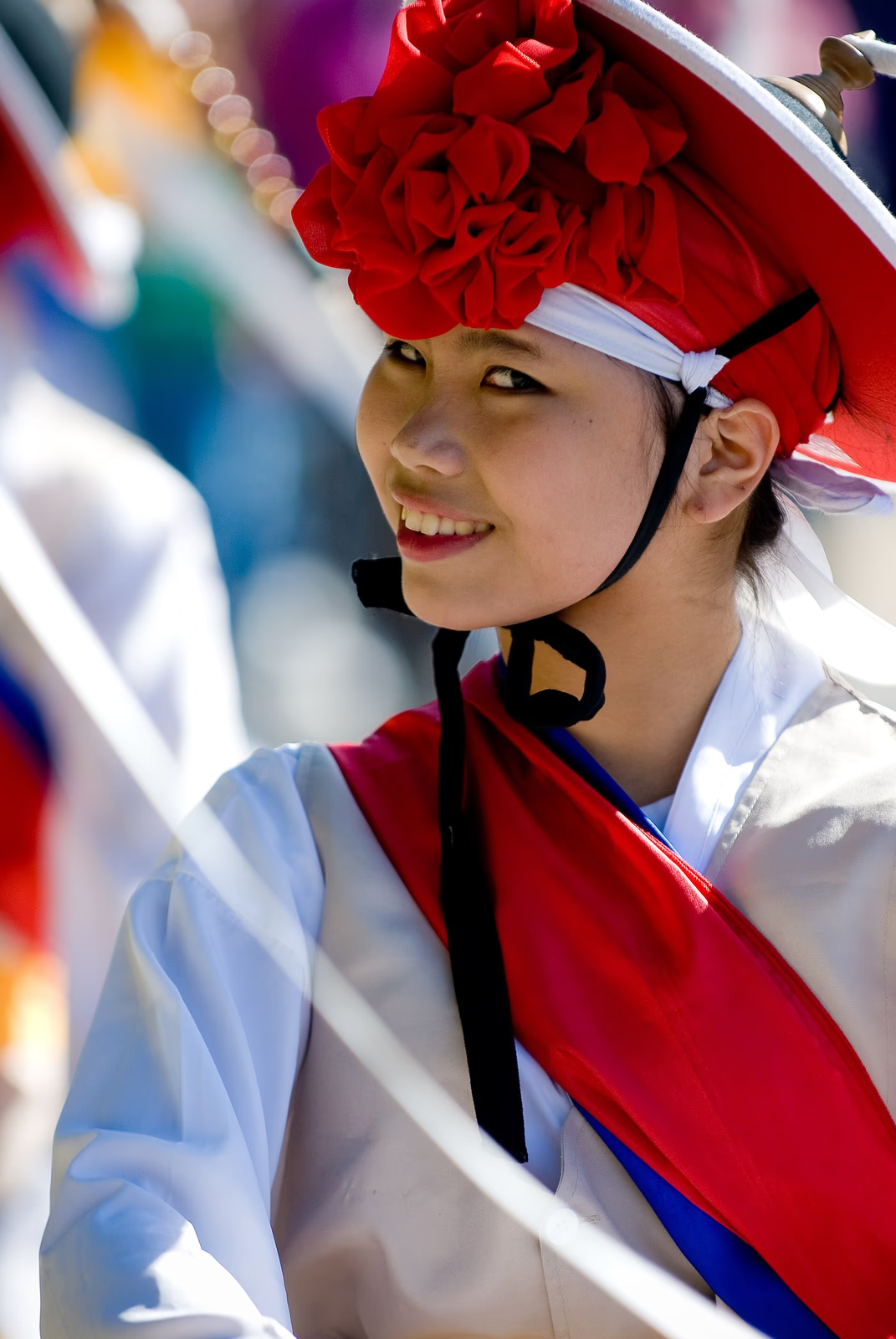
Photo: 2008 Yongsan Fall Festival-01.jpg by David McNally, USAG-Yongsan — Public domain, via Wikimedia Commons.
When Not to Use It
The technique has a failure mode that is worth naming, because it is where most people give up.
Layering works when each exposure contributes something legible. If both frames are busy, the result is visual mud: no subject, no structure, and no reason to look. The corrective is the same as for any composition, which is to ask what the viewer is supposed to see, and to remove anything that does not serve that.
It is also worth resisting the temptation to use the mode on everything. In a set of twenty images, one or two multiple exposures provide contrast and suggest that the photographer is in control of the technique. Twelve of them make the shoot look like a gimmick, and the audience stops reading the frames as pictures and starts recognising the trick.
Practical Tips
- Experiment with your camera's multiple exposure mode. Most modern bodies have one.
- Commit to creating effects in camera rather than always reaching for post-production.
- Use the technique for chaotic, high-energy environments where a single frame cannot hold the scene.
- Accept the unpredictability. It is the reason the results look unlike composites.
- Underexpose each frame by one third to two thirds of a stop.
- Open on a dark or simple frame if you want room for what follows.
- Study photographers who create effects optically rather than digitally.
- Use it sparingly within a set. Two strong layered frames say more than a series of them.
Photo: 20th Anniversary Schwab Foundation Gala Dinner (29950626247).jpg.jpg) by Foundations World Economic Forum — CC BY 2.0, via Wikimedia Commons.
Further Reading
- shot types and angles in practice
- AI features in modern mirrorless cameras
- editing concert photographs
Conclusion
Kevin Tachman's in-camera multiple exposures are a useful corrective in an era of unlimited post-production options. The technique is harder than compositing, less controllable, and impossible to preview accurately, which is exactly why the results carry the energy of the event rather than the tidiness of a studio.
The broader lesson is about constraint. When you can do anything afterwards, deciding to do it in the moment restores a kind of attention that generous technology erodes. You do not have to shoot multiple exposures to benefit from that. You only have to commit to what you can make with the camera, and let the rest be evidence.
FAQ
How do you create multiple exposures in camera?
Most DSLR and mirrorless cameras have a multiple exposure mode in the shooting menu. You select the number of frames to combine, usually between two and ten, and the camera overlays them. Many bodies also let you choose between additive, average, bright and dark blending modes.
Why do it in camera instead of in Photoshop?
Because the result is genuinely different. Optical layering produces unpredictable interactions and happy accidents that compositing rarely reproduces, and the process forces a commitment to the image in the moment rather than the promise of fixing it later.
What subjects work best for multiple exposures?
Chaotic, high-energy environments: fashion shows, concerts, street scenes, sporting events. The technique also works for slower work, such as layering a portrait with a landscape or combining architectural details into an abstract frame.
What settings work best?
Underexpose each individual frame slightly, by a third to two thirds of a stop, since the combined exposures brighten the result. Manual exposure keeps the frames consistent. A tripod gives precise alignment; handheld shooting gives drift and energy.
How do you layer a person onto a location in camera?
Photograph the person against a dark background first, or underexpose the ambient frame and light the subject with flash. The dark or correctly flashed area stays clean while the second exposure fills the rest of the frame.
Will the images need editing afterwards?
They usually need less than people expect: some exposure correction and a little contrast. Heavy retouching tends to destroy the quality that made the technique worth attempting, so the discipline is to keep the edit light and let the optical effect stay visible.