Posing & Portraits
Iman Looks Back at 41 Years of Iconic Photographs in Vogue
Iman has been photographed for four decades by almost everyone who mattered in fashion photography, and her account of that career is more instructive than m...
Iman has been photographed for four decades by almost everyone who mattered in fashion photography, and her account of that career is more instructive than most histories written from outside the frame. She is that rare thing: a subject with a professional understanding of what makes an image work.
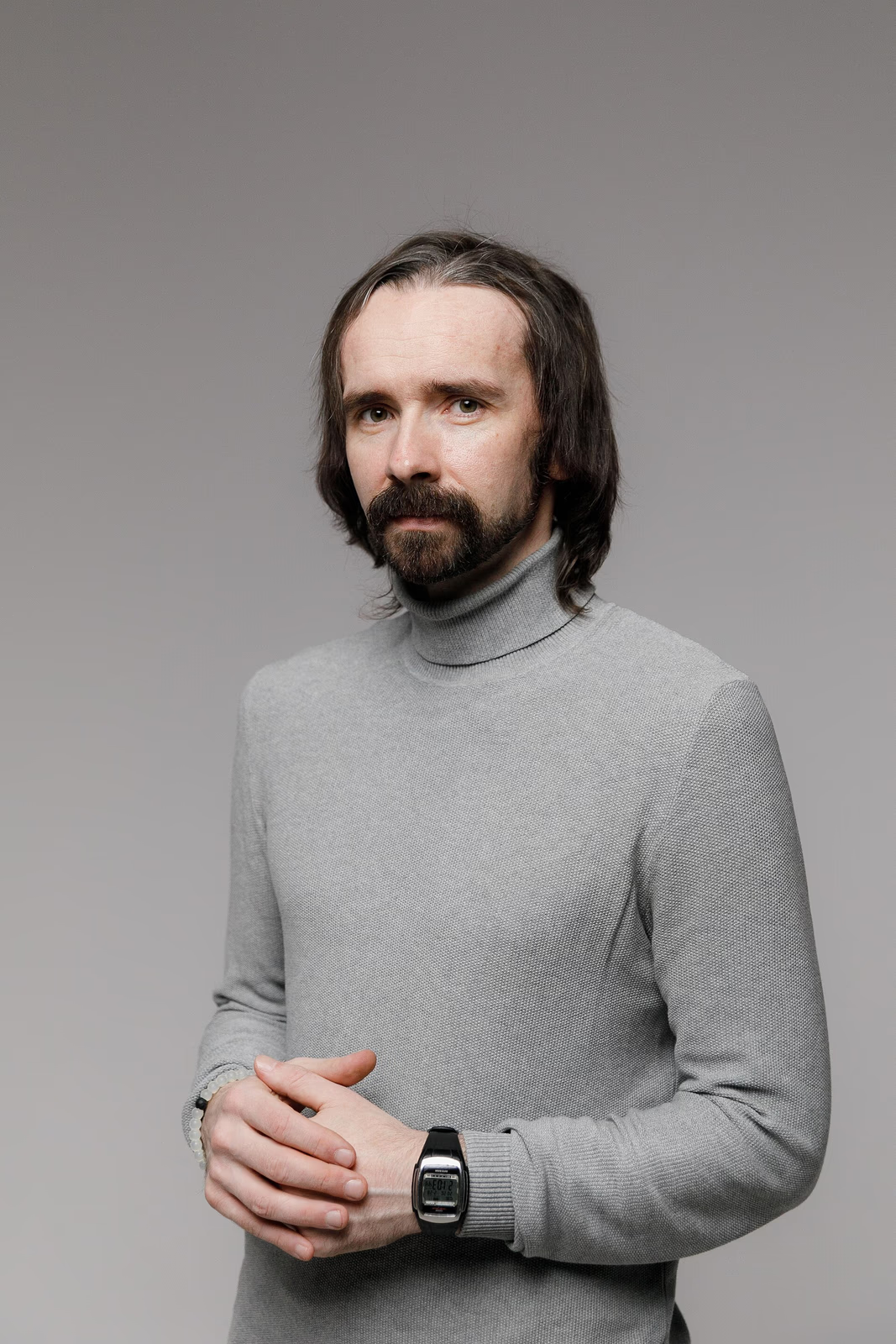
Photo: Scientist (chemist) Siarhei Besarab Studio portrait 2026 (02).jpg_Siarhei_Besarab_Studio_portrait_2026_(02).jpg) by Volha Sh — CC BY-SA 4.0, via Wikimedia Commons.
The Photograph as Collaboration
"I was astounded by our portrait's composition: two distinct people who ultimately identified as one," Iman says of the photograph of herself with David Bowie.
The remark describes something that separates great portraiture from competent portraiture. A portrait is never only about the subject or only about the photographer; it is a record of a relationship at a particular moment. When two people are genuinely connected in front of a camera, the image carries evidence of it, and viewers respond to that evidence long before they analyse the lighting.
The practical implication is uncomfortable for photographers who prefer to hide behind technique. Rapport is not a soft skill that sits alongside the craft. It is the mechanism that produces the frame. The most common reason a portrait fails is not exposure or composition. It is that nobody was actually present.
Four Decades of Evolution
Iman's career spans a period of radical change: the analog discipline of the 1970s and 1980s, the digital transition of the 1990s and 2000s, and the social media era that followed. Along the way she worked with Richard Avedon, Irving Penn, Helmut Newton, Peter Lindbergh, Steven Meisel and many others.
What is useful about that span is the opportunity to separate what actually changed from what only appeared to. The delivery changed completely: film to digital, print to multi-platform, gatekeepers to an open distribution system where anyone can publish. The fundamentals did not. Light, composition, expression and the relationship between the two people in the room produced the same results in 1980 as they do now.
Photographers tend to overestimate the significance of the technical shift because it is the part they can buy. The Avedon photographs Iman sat for would still work if they had been shot on a modern mirrorless body. The same cannot be said for equipment spent on images with nothing behind them.
What Makes an Image Iconic
After 41 years in front of the camera, Iman's view of what separates the images that endure from those that are forgotten is not about technique. Technical perfection helps but never suffices. Concept matters, but an elaborate idea cannot rescue a photograph without soul.
What she describes is harder to manufacture: a sense of truth, a moment of genuine connection, an image that shows not only how someone looked but who they were. That quality is what people mean when they call a photograph alive.
Two things follow for anyone making portraits.
Look for the moment of unguardedness. It usually arrives after the technical work is done, in the second or two when a subject stops managing their face. Photographers who shoot continuously find it; photographers who shoot once at the moment they think is right usually miss it.
Do not let the setup become the subject. Elaborate production can produce beautiful pictures of nothing. If the concept is doing more work than the person in the frame, the image will be admired and forgotten.
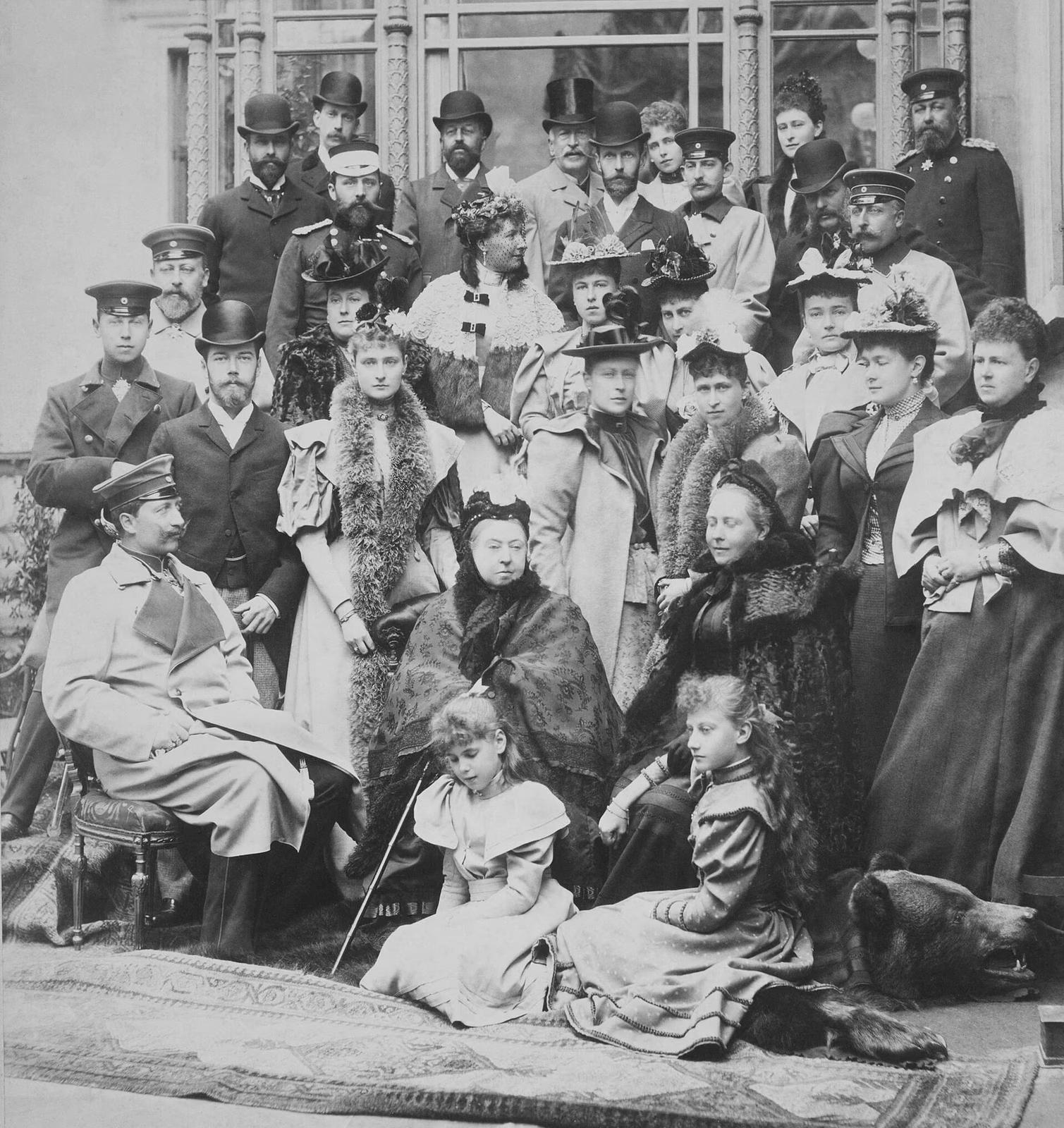
Photo: Queen Victoria surrounded by her family - Coburg, 1894 (1 of 2).jpg.jpg) by Eduard Uhlenhuth — Public domain, via Wikimedia Commons.
Building Rapport Quickly
The most transferable skill in Iman's account is the ability to establish trust in a short time, which is the normal condition of professional portraiture. Nobody has a week.
Talk before you pick up the camera. Learn something about the person. The conversation is not a delay; it is the first part of the shoot.
Explain what you are trying to achieve, and ask for input. Subjects who understand the intention cooperate with it. Subjects who do not understand it wait to be directed.
Give them something to do rather than a pose to hold. Activity produces natural behaviour; instructions produce stiffness.
Show them a frame occasionally. Most people relax once they can see that they do not look strange. Keeping the image hidden builds anxiety.
Work at their pace where possible. Rushing a nervous subject produces exactly the images they were afraid of.
Say what you are doing and why. "I am moving the light because it is putting a shadow under your eyes" treats the subject as a colleague rather than a prop.
Learning From the Photographers of Her Era
Four names come up repeatedly in Iman's career, and each offers a distinct lesson worth studying deliberately.
Richard Avedon for psychological depth and plain backgrounds: subjects photographed against white, with nothing to hide behind, framed to feel confrontational and formal at the same time.
Irving Penn for formal precision: studio discipline, controlled light, immaculate printing, and a refusal to let the frame contain anything accidental.
Peter Lindbergh for raw authenticity: black and white, minimal retouching, and an insistence on photographing people as themselves rather than as polished versions of themselves.
Helmut Newton for narrative provocation: fashion embedded in stories with tension and ambiguity, often shot in locations that made the garment a character rather than a product.
The point of studying them is not to copy a look. It is to see four different answers to the same question, which is what a photograph is for.
Photo: Fashion Time, Modeling Photography in Tbilisi - Iranian Model - Jorj Barber 12.jpg by Mostafameraji — CC0, via Wikimedia Commons.
Practical Tips
- Build genuine rapport with the subject before you start shooting.
- Study the history of fashion photography to understand what came before you.
- Treat technical skill as necessary but not sufficient. Emotional truth is what lasts.
- Let the best portraits emerge from collaboration rather than direction.
- Watch for the unguarded moment, usually after the setup is finished.
- Show the subject the occasional frame so they can relax.
- Keep the concept subordinate to the person. If the idea is the subject, the portrait is decoration.
- Shoot enough frames to find the real one. The decisive moment is rarely the first.
Further Reading
- the most famous photographers to know
- camera settings for portrait work
- photography books for every level
Conclusion
Iman's four decades in front of the camera are a record of changing technology and unchanging fundamentals. Cameras, film stocks, retouching tools and distribution platforms have all been replaced at least once. Connection, trust and truth have not.
The photographers whose work endures are the ones who understood that the photograph is made by two people rather than by one person and a machine. That is the lesson worth carrying out of a 41-year archive, and it costs nothing to apply on the next shoot.
FAQ
What makes a fashion photograph iconic?
Beyond technical skill and conceptual ambition, it captures something true about the subject: a moment of real connection between photographer and subject. Iconic images feel alive rather than manufactured, and they show something about the person that goes beyond their appearance.
How has fashion photography changed during Iman's career?
Mostly on the technical and distribution side: film to digital, print to multi-platform, professional gatekeepers to social media. The fundamentals of light, composition, connection and truth have stayed constant throughout.
How do you build rapport with a subject quickly?
Talk before you pick up the camera, learn something about them, explain what you are trying to achieve, ask for their input, and treat the session as a collaboration rather than a transaction. Comfortable subjects photograph better, and the comfort is visible.
Which photographers from Iman's era are worth studying?
Richard Avedon for psychological depth, Irving Penn for formal precision, Peter Lindbergh for raw authenticity, and Helmut Newton for provocative narrative. Each offers a different answer to the question of what a photograph is for.
Does equipment matter for this kind of portraiture?
Much less than the relationship in the room. A simple setup used with genuine attention to a subject will outperform an elaborate one used to avoid the person. The technical part is the easy part to learn.
How long does it take to get a good portrait?
Usually longer than the photographer expects and shorter than the subject fears. The first frames are warm-ups, the real image arrives once the performance relaxes, and the way to reach it faster is conversation rather than more direction.